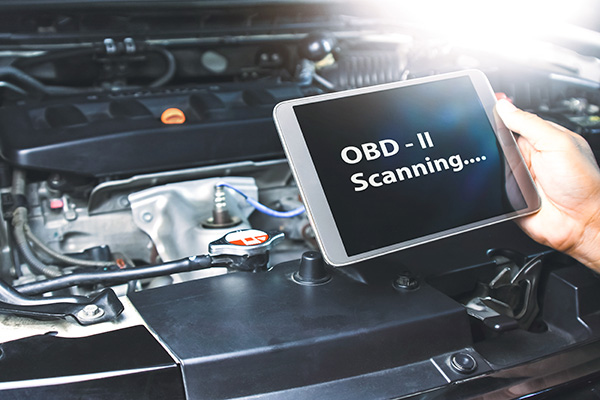
Most drivers think of a “diagnostic” as plugging in a scanner to read a check engine light code. In reality, a proper diagnostic session can reveal far more than a single trouble code. Modern vehicles constantly record data about how sensors, modules, and mechanical parts are behaving, even when no light is on. When a technician knows how to read that information, it can uncover problems long before you are stuck on the side of the road.
1. Old or Hidden Faults That Never Turn On the Light
Your car’s computers store information even when the dash looks perfectly normal. Some faults only show up for a moment, then disappear before the light has time to come on. Others are stored as “history” or “pending” codes that never turn into an obvious warning.
During a diagnostic, technicians can see:
- Past misfires that happened under certain load or rpm
- Short-term voltage drops that hint at battery or wiring issues
- Intermittent sensor glitches that came and went quickly
- Modules that briefly lost communication with each other
From the driver’s seat, everything may seem fine again the next day. On the scan tool, those short events form a pattern that points to loose connections, weak components, or wiring starting to fail.
2. Intermittent Misfires and Small Performance Issues
Many engines have small misfires that you cannot feel yet. The computer counts these tiny misfires cylinder by cylinder and stores that data. When we connect a professional-level scanner, we can watch misfire counters climb under specific conditions, such as light throttle on hills or at certain speeds.
This helps us spot:
- Coils or plugs that are just beginning to break down
- Cylinders that are a little weaker than the others
- Fuel injectors that are starting to get dirty or stick
- Problems that only show up when the engine is hot or under load
Catching misfires at this stage lets you plan simple repairs instead of waiting until the engine shakes, the check engine light flashes, and the catalytic converter starts to suffer.
3. Sensor and Module Problems Before Parts Completely Fail
Lots of parts are either “on” or “off” from a driver’s point of view, but behind the scenes, their signals may be drifting out of the normal range for months. A diagnostic session lets us look at live data from dozens of sensors and modules while the vehicle is running.
Instead of just asking, “Is this sensor bad?,” we can compare its behavior to expected values. That can reveal:
- Oxygen sensors that are getting slow to respond
- Airflow meters that read just slightly off at idle or cruise
- Cooling temperature sensors that jump around instead of changing smoothly
- Steering, ABS, or transmission modules that drop communication now and then
By picking up these early warning signs, you can replace a weak part on your schedule instead of discovering it when the car finally refuses to cooperate.
4. Problems in Systems You Might Not Notice Yet
A good diagnostic is not just about the engine. Modern scan tools can talk to transmission, ABS, airbag, steering, and body control modules as well. Those systems may be logging faults long before you feel a harsh shift or see an ABS light.
During a thorough check, diagnostics can uncover:
- Transmission shift timing issues that hint at valve body or solenoid problems
- ABS wheel speed sensor faults that only happen at certain speeds
- Early steering angle sensor issues that can affect stability control
- Airbag or restraint system codes that would keep the system from working correctly in a crash
From the driver’s perspective, the vehicle might still feel “normal.” From ours, those stored codes are a chance to fix safety-related problems before they show up in an emergency.
5. Clues About Driving Habits and How Hard the Car Has Been Worked
Diagnostics can also tell a story about how the vehicle has been used. We can see things like average speeds, number of cold starts, and how often the engine has been pushed to high rpm. On some vehicles, data shows how often the transmission reaches high temperatures or how frequently certain stability systems intervene.
That information matters when:
- You are buying a used car and want to know how it was treated
- You suspect towing or heavy loads have stressed the drivetrain
- You are chasing unusual brake or suspension wear patterns
- You want a realistic maintenance plan based on actual use, not just the odometer
We use this kind of data to suggest service intervals that match your real driving, so you are not guessing about what “severe service” means in your case.
Get Car Diagnostic Service in San Jose, CA with B&C Auto Center
We use professional diagnostic tools and real-world experience to look deeper than a simple trouble code. We can scan all major systems, review stored and live data, and explain what your car is telling us in plain language so you know what needs attention now and what can wait.
Call B&C Auto Center in San Jose, CA to schedule a diagnostic check and turn warning signs into a clear, practical repair plan.