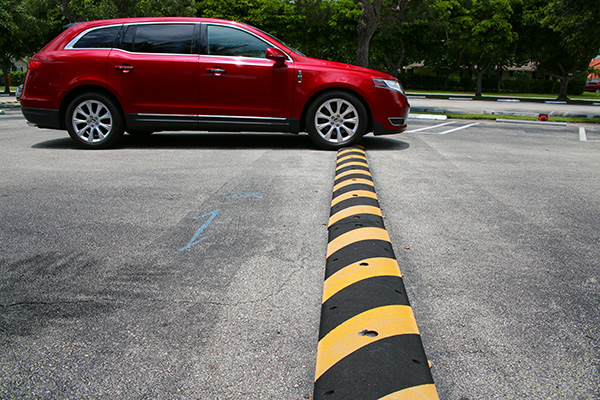
Your car should settle quickly after going over a dip, driveway entrance, or speed bump. If the body keeps moving up and down several times afterward, the suspension is no longer controlling that motion the way it should.
Most drivers first notice the problem on familiar roads. A bump that used to feel normal suddenly makes the car float, rock, or continue bouncing. That change usually points toward worn shocks or struts, but several other suspension problems can create a similar feeling.
Worn Shocks or Struts Are the Most Common Cause
Shocks and struts do not hold the vehicle up by themselves. Their job is to control how quickly the springs move after the suspension compresses or extends.
When the internal valves and seals wear, the shock absorber loses its ability to slow that movement. The spring keeps oscillating, so the vehicle bounces more than once after a bump. At our shop, we pay close attention to how quickly each corner settles and whether one end of the vehicle feels noticeably looser than the other.
A Leaking Strut Can Lose Damping Ability
Many shocks and struts contain hydraulic oil. If a seal begins leaking, enough fluid can escape to reduce damping performance.
A slight film around a shock's body isn't always an active leak, so we inspect the whole component before recommending replacement. Wet oil running down the housing, combined with excessive bouncing, is a much stronger sign that the unit is worn. A damaged dust boot or rusty piston rod can also shorten seal life.
Broken or Weak Springs Can Change How the Car Reacts
Springs support the vehicle's weight and let the suspension move over uneven pavement. If a coil spring breaks or weakens, ride height and suspension travel can change.
A broken spring may leave one corner sitting lower or create a clunk over bumps. Weak springs can allow the vehicle to bottom out more easily or make the body move farther than normal. The bouncing still points to damping control, but we inspect the springs because replacing worn struts while ignoring a damaged spring leaves part of the problem unresolved.
Worn Strut Mounts and Bushings Can Add Extra Movement
Suspension components connect to the body through mounts and rubber bushings that isolate noise and control movement. As those parts age, the rubber can crack, separate, or soften.
You may hear knocking or clunking at the same time the vehicle feels loose over dips. Worn control arm bushings can also allow the wheel to move more than intended during braking and over rough pavement. During an inspection, we check for actual play rather than assuming every unstable feeling comes from the shocks alone.
Tire Problems Can Make the Ride Feel Worse
Tires are part of the suspension system because they are the first to absorb small road impacts. Incorrect pressure, damaged sidewalls, uneven wear, or mismatched tires can change how the car responds over bumps.
Overinflated tires tend to make impacts feel sharper, while underinflated tires can make the vehicle feel vague and unstable. A tire issue usually doesn't cause repeated body bouncing on its own, but it can make worn suspension parts feel much worse. Tire condition and pressure are easy things to check before moving deeper into the suspension.
The Bounce Test Can Give You a Clue
You can sometimes get a rough idea of shock or strut condition by pressing down firmly on one corner of the vehicle and releasing it. A healthy suspension should rise and settle quickly.
If the body continues moving up and down several times, damping is weak. That test is only a clue, not a complete answer, because some modern suspensions are stiff enough that pushing on the body does not tell you much. Road behavior, visual condition, and physical inspection give a clearer picture.
Watch for Other Signs of Weak Suspension Control
Excessive bouncing rarely appears on its own. Worn shocks or struts often create other changes in how the vehicle handles.
Common signs include:
- The front end dips heavily during braking
- The rear squats more than normal during acceleration
- The body leans excessively through turns
- The vehicle feels unsettled on rough pavement
- Tires develop cupping or uneven wear
- One corner continues bouncing after a bump
- The car feels floaty at highway speeds
- You hear clunks along with excessive movement
These symptoms suggest the suspension is struggling to keep the tires and body under control.
Worn Shocks Can Affect Braking and Tire Contact
The biggest concern isn't just that the ride feels uncomfortable. Shocks and struts help keep the tires pressed against the road as the suspension moves.
If a wheel is bouncing instead of staying controlled, tire contact can become less consistent on rough pavement. That can affect braking, steering response, and stability during quick maneuvers. Regular maintenance lets us catch worn suspension parts before handling changes become obvious.
Get Suspension Service In San Jose, CA, With B&C Auto Center
If your car keeps bouncing after dips, speed bumps, or rough pavement, B&C Auto Center in San Jose, CA, can check the shocks, struts, springs, mounts, bushings, tires, and related suspension components.
Schedule a suspension check before excessive body movement starts affecting tire wear, braking, and overall vehicle control.