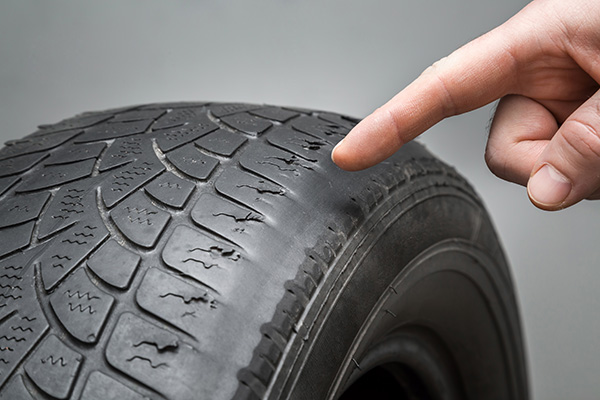
One-sided tire wear can stay hidden until the tread is nearly gone. The outer shoulder is easy to spot while walking past the car, but severe inner-edge wear may remain out of view beneath the vehicle. A tire can look usable from the side and still have a nearly bald strip along the inside.
Replacing the tire solves the immediate safety concern, but it does not explain why the wear happened. Alignment angles, loose suspension parts, incorrect pressure, impact damage, and driving patterns can all change how the tread meets the road. Unless the underlying cause is corrected, the replacement tire may develop the same pattern.
Incorrect Toe Can Scrub Away One Edge
Toe describes whether the fronts of the tires point slightly toward or away from each other. Even a small amount of incorrect toe can make the tread drag sideways as the vehicle moves. Instead of rolling directly ahead, the tire is continuously being scrubbed across the pavement.
Toe wear often creates a feathered texture. Run your hand carefully across the tread, and it may feel smoother in one direction and sharper in the other. The vehicle may still drive reasonably straight, so drivers do not always realize the alignment is off until significant tread has disappeared.
Camber Changes How The Tire Sits On The Road
Camber is the inward or outward tilt of the wheel when viewed from the front of the vehicle. Too much inward tilt places extra pressure on the inner shoulder. Too much outward tilt can overload the outer edge. Some vehicles use a small amount of camber by design, but excessive tilt causes uneven wear.
Camber can move out of specification after a pothole strike, curb impact, suspension repair, or change in ride height. Worn bushings, springs, ball joints, and wheel bearings can also allow the wheel to lean farther than intended. An alignment measurement shows the angle, while an inspection helps explain why it changed.
Loose Suspension Parts Can Alter Alignment While Driving
An alignment machine measures the vehicle while it is sitting still, but worn components may let the wheel move once road forces are applied. A cracked control arm bushing can shift during braking. A loose ball joint or tie rod can cause the wheel to shift over bumps and turns. Weak springs can lower one corner and alter the suspension geometry.
Adjusting alignment without repairing looseness rarely produces a lasting result. The settings may look correct in the service bay, then move again on the road. Suspension and steering parts should be checked before making alignment adjustments, especially when one tire has worn much faster than the others.
Tire Pressure Can Make Existing Wear Worse
An underinflated tire flexes more and tends to carry extra load along its shoulders. If the alignment is already putting pressure on one edge, low inflation can accelerate the damage. Overinflation loads the center more heavily and can reduce the usable contact area.
Pressure should be checked when the tires are cold and set according to the label inside the driver’s door area. The maximum number printed on the tire sidewall is not the normal operating recommendation. Seasonal temperature changes also affect pressure, so a tire that was correct several months ago may now be several pounds low.
The Tread Pattern Offers Useful Clues
Different wear patterns point toward different parts of the vehicle. The following clues can help guide the inspection:
- Inner-edge wear can come from excessive negative camber, incorrect toe, weak springs, or worn suspension bushings.
- Outer-edge wear can involve positive camber, repeated hard cornering, low pressure, or alignment problems.
- Feathered tread usually points toward incorrect toe or loose steering components.
- Scalloped or cupped areas can develop from weak shocks, worn struts, imbalance, loose suspension parts, or a bouncing tire.
- One isolated bald section can suggest a damaged tire, bent wheel, braking problem, or internal belt issue.
These patterns are helpful, but several causes can exist together. A low tire with incorrect alignment and worn suspension parts may show a mixed pattern that cannot be explained by one measurement alone.
Potholes And Curb Impacts Can Bend Components
A hard impact does not have to completely break a part to cause tire wear. A wheel, control arm, strut, steering knuckle, or tie rod can bend slightly while the vehicle continues to drive. The steering wheel may sit off-center, or the car may begin pulling after the impact.
Sometimes the only clear sign is a tire that starts wearing unevenly. If an alignment angle cannot be adjusted into specification, a bent or shifted component may be preventing the wheel from sitting correctly. Careful measurements help distinguish a routine adjustment from damage that requires repair.
Rotation Helps With Normal Wear, Not Mechanical Problems
Front tires commonly wear faster because they steer, carry more braking load, and often handle the engine’s weight. Rotating the tires can spread normal wear across all four positions and help the set last longer. The correct pattern depends on tire design, wheel sizes, and whether the vehicle uses directional or staggered tires.
Rotation cannot correct a worn ball joint, bent component, or bad alignment. Moving a damaged tire to another position may only hide the pattern for a while. Regular maintenance should combine rotation with pressure checks and a tread inspection to catch unusual wear before the tire becomes unsafe.
Why One-Sided Wear Should Be Addressed Quickly
A tire with one worn edge has less rubber available for braking and wet-road grip. Inner-edge wear is especially risky because the damaged area may not be visible during a casual walk around the car. In severe cases, cords can become exposed while the outer half of the tread still appears usable.
Uneven wear also makes the vehicle less predictable. It can contribute to pulling, road noise, vibration, and reduced traction. Correcting the cause early protects the remaining tires and helps the vehicle respond more consistently during braking and cornering.
Get Uneven Tire Wear And Alignment Service In San Jose, CA, With B&C Auto Center
If one side of your tires is wearing faster, B&C Auto Center in San Jose, CA, can inspect the alignment, steering, suspension, tire pressure, wheels, and tread pattern to find the cause.
Contact us to schedule an appointment before hidden edge wear shortens the life of another tire.